Heads up: CrazyCatVid is reader supported. Some links below are affiliate links (Amazon, Litter-Robot, Life's Abundance). If you buy through them I earn a small commission at no extra cost to you. Every product here has been through my own four cats first.
You want me to tell you twice a week is fine. I know. I've been running this site since 2009 and this is the single most common question I get, and there is always a hopeful little edge to how people ask it. The real answer is every day. If you have more than two cats, twice a day.
I have four cats. That is a lot of litter, and I did it the hard way for years. Let me save you the trial and error.
Scoop Daily. Not “Most Days.” Daily.
Cats bury waste because in the wild it hides their scent from predators and rivals. That instinct does not switch off because your cat lives in a condo and owns a heated blanket. When the box is already full, they cannot bury anything properly, and the whole arrangement starts to feel unsafe. They are not thinking “gross.” They are thinking “exposed.”
Daily scooping keeps the box functional in their head. Miss two days and you are already in the zone where a picky cat starts scouting a backup location. Minnie is my picky one. She will sit next to a box that is one day overdue and stare at me until I fix it. She has never once used the floor, but she makes sure I know she considered it.
Your Cat Is Not Getting Revenge On You
This is the part I really want people to hear. When a cat pees on the bath mat or the pile of laundry by the door, the internet tells you they are mad at you. They are not. Cats do not run revenge campaigns. They are solving a problem.
A dirty box is an unusable box. So they find a surface that is absorbent, soft, and away from the smell. Bath mat. Laundry. Dog bed. My yoga mat, once, which I do not want to talk about. It reads as personal, but it is just a cat doing basic math about where it is safe to go.
Here is the part that matters more. Peeing outside the box is also a top symptom of urinary tract problems, crystals, and blockages, and a blocked male cat is a genuine emergency. So the rule is: clean the box first, and if the behavior continues after the box is spotless, call your vet. I am an owner who has spent a lot of money on cat gear, not a veterinarian, and this is one of the places where guessing gets expensive in the worst way.
The Ammonia Problem Nobody Talks About
Cat urine breaks down and releases ammonia. In an enclosed box, in a small room, with no airflow, that concentration climbs faster than you would guess. If you can smell it standing up at full height, your cat is putting their entire face directly into it several times a day.
Ammonia irritates respiratory tissue. Cats with asthma get worse in homes with neglected boxes, and so do humans. You are not being fussy when you scoop, you are managing the air quality of the room. I keep a box in my office and noticed the difference in my own sinuses within a week of tightening up.
The Actual Schedule
- Scoop: every single day, minimum. Twice daily if you have three or more cats, or if you use covered boxes.
- Full dump and wash: every 2 to 4 weeks. Good clumping litter buys you the longer end. Non-clumping is closer to two weeks, no exceptions.
- Wash with: unscented dish soap and hot water. Not bleach, not ammonia-based cleaners, nothing heavy on pine or citrus. Cats hate citrus, and bleach plus urine makes fumes you do not want in a closed bathroom.
- Replace the box itself: roughly once a year. Plastic scratches, scratches hold urine, and eventually no amount of scrubbing fixes a box that smells the second it gets warm.
How Many Boxes You Actually Need
One box per cat, plus one extra. Four cats means five boxes. I know. I hated typing it too.
That formula exists because cats guard resources without looking like they are guarding anything. Stripes will casually park himself in a doorway and functionally block access to a box while appearing to do absolutely nothing at all. The extra box removes the bottleneck. If you are short on boxes, you will see it as “random” accidents that are actually a traffic problem.
Where To Put Them
Away from food and water. Cats will not eat next to their toilet, and if you force that choice, one of the two activities is moving somewhere you will not like.
Also spread them out. Five boxes lined up in one closet is one box with extra steps. Different rooms, different floors, and never somewhere a cat can get cornered on the way out. That last one causes more “behavior problems” than anything else I have seen.
The Shortcut That Made All Of This Manageable
I did the manual version for years. Four cats, five boxes, scooping every night like a raccoon with a headlamp. Then I switched to automatic and my daily litter labor dropped by roughly 90%.
I use the Litter-Robot 4 ($699, rated for up to 4 cats) and it is the one piece of cat gear I would re-buy without hesitating. It cycles after every use, so the box is effectively always clean, which is exactly the state this whole article is arguing for. On a tighter budget, the Litter-Robot Evo is $599 and handles up to 2 cats.
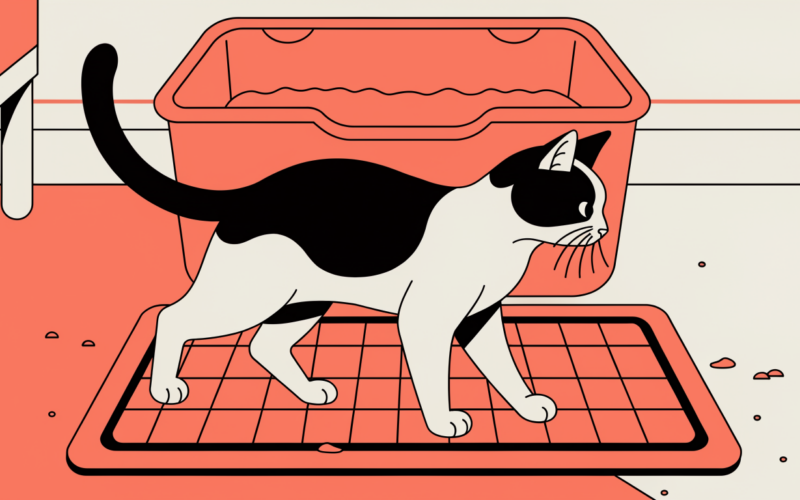
If automatic is not happening this year, the manual routine works. It just requires doing it daily, and the right tools make that a two-minute job instead of a chore you avoid. I use a WePet aluminum scoop ($8.50, because plastic scoops flex and snap), a Pieviev litter mat ($13.99, catches the tracking Luna generates at 3am), and Arm & Hammer deodorizer pods ($5.99) between full changes.
The One-Line Version
Scoop daily. Full change every 2 to 4 weeks. One box per cat plus one. Keep them away from food and spread them out. And if a spotless box does not fix an accident problem, that is a vet call, not a training problem.
Do that and you never have to have the conversation where you convince yourself your cat hates you. Luna still runs full speed into walls at 3am, but she has never once been passive aggressive about the litter box, because I do not give her a reason to be.
Watch it on YouTube
Litter-Robot 4 Shield: Worth It? 50-Second Honest Test
Feline Facts, product tests on camera, and the four cats being themselves.