Heads up: CrazyCatVid is reader supported. Some links below are affiliate links (Amazon, Litter-Robot, Life's Abundance). If you buy through them I earn a small commission at no extra cost to you. Every product here has been through my own four cats first.
Four cats live here without fighting. That did not happen by luck. Every new cat came in with the same slow, boring, two-week plan, and the one time I rushed it (Luna, day 4, I got impatient) it set things back a month. Here is the plan, day by day.
Before the new cat arrives
- Set up a base room. A bedroom or bathroom with a door. Litter box, food, water, bed, scratcher, hiding spot. This is the new cat's whole world for the first week.
- Extra litter box. The rule is one per cat plus one. Do not skip this. A cat who cannot access a clean box starts marking.
- Pheromone diffuser. In the main living area, plugged in a few days early.
Feliway MultiCat Diffuser Starter Kit · About $30
Designed specifically for multi-cat tension. Ran it for the first month of every introduction here.
Days 1 to 3: scent only
New cat stays in the base room with the door closed. The resident cats sniff the door. Swap bedding between the cats daily so each smells the other. Feed both sides of the door at the same time so the smell pairs with something good.
Days 4 to 7: sight without contact
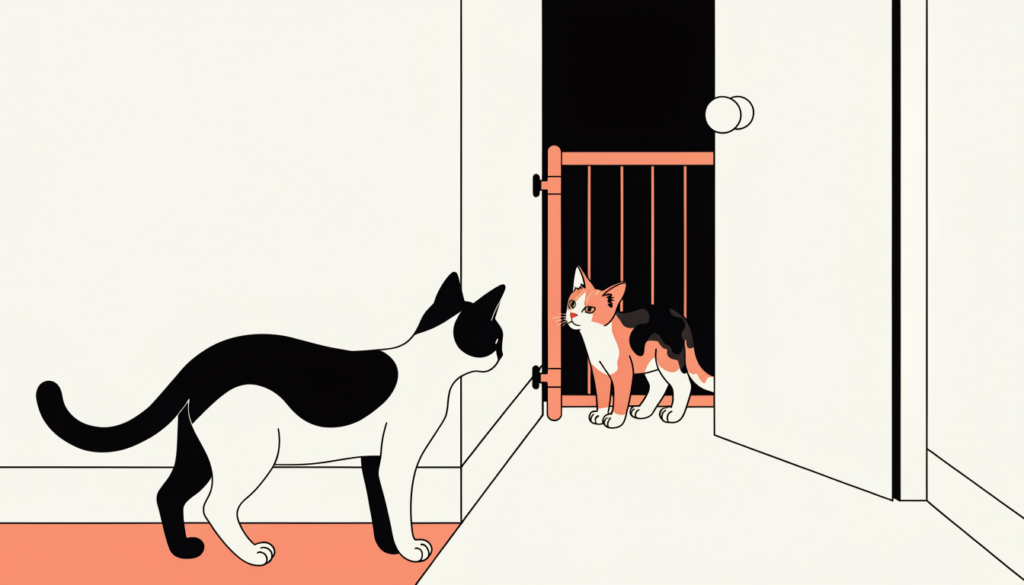
Replace the closed door with a barrier they can see through. A tall pet gate or two stacked baby gates. Feed on both sides, a few feet back from the gate, moving closer each day. Hissing is fine. Flat ears and lunging means back up a day.
Extra Tall Pet Gate with Cat Door · About $60
Lets cats see and smell each other without contact. The single most useful piece of gear for introductions.
Days 8 to 10: short supervised visits
Open the gate for ten minutes with you present and a wand toy in hand. Play with both cats at once so the attention goes to the toy, not each other. End the visit before anyone gets tense. Then a little longer each day.
Feather Wand Cat Teaser Toy · About $10
Redirects tension into play during the first face-to-face sessions. Buy two so each cat has one.
Days 11 to 14: expanding the territory
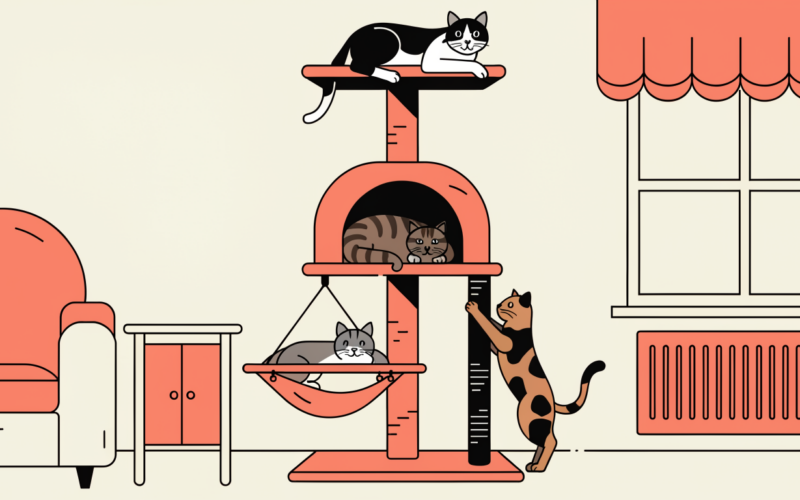
New cat gets the run of the house for a few hours a day, back to the base room at night. Add vertical space in shared rooms so nobody feels cornered. By day 14 most cats are ignoring each other, which is success.
Yaheetech 63 inch Cat Tree · About $70
Vertical escape routes end most standoffs. Put one in the main room before the first visit.
Signs to slow down
- Sustained hissing with flattened ears
- Either cat refusing to eat near the barrier
- Litter box avoidance from anyone
- Stalking behavior rather than curiosity
If any of these show up, go back one stage for two days. Nobody has ever been hurt by a slow introduction. Plenty have by a fast one.
If it goes wrong
If there is a real fight, separate immediately, back to closed-door stage for three days, and clean any marking with enzyme cleaner so it does not become a habit.
Rocco & Roxie Enzyme Cleaner · About $20
Fully removes marking odor so the spot does not get re-marked. Keep a bottle ready during introductions.
Frequently asked questions
How long does it take for cats to get used to each other?
Two weeks to peaceful coexistence is typical with a slow plan. Actual friendship, if it happens, can take months. Ignoring each other is a win.
Should I let my cats fight it out?
No. Fights create lasting fear and marking problems. Separate and go back a stage.
Is it easier to introduce a kitten or an adult cat?
Kittens are usually accepted faster because they are not seen as a threat. Adult introductions work fine but need the full two weeks.
The four cats who went through this are on the Meet the Cats page. Body language cues during introductions are decoded in the body language guide.